
ADA/AODA Washroom Requirements: What to Confirm Before Design

Accessibility is one of the fastest ways a washroom project can either move smoothly through approvals or get stuck in revisions.
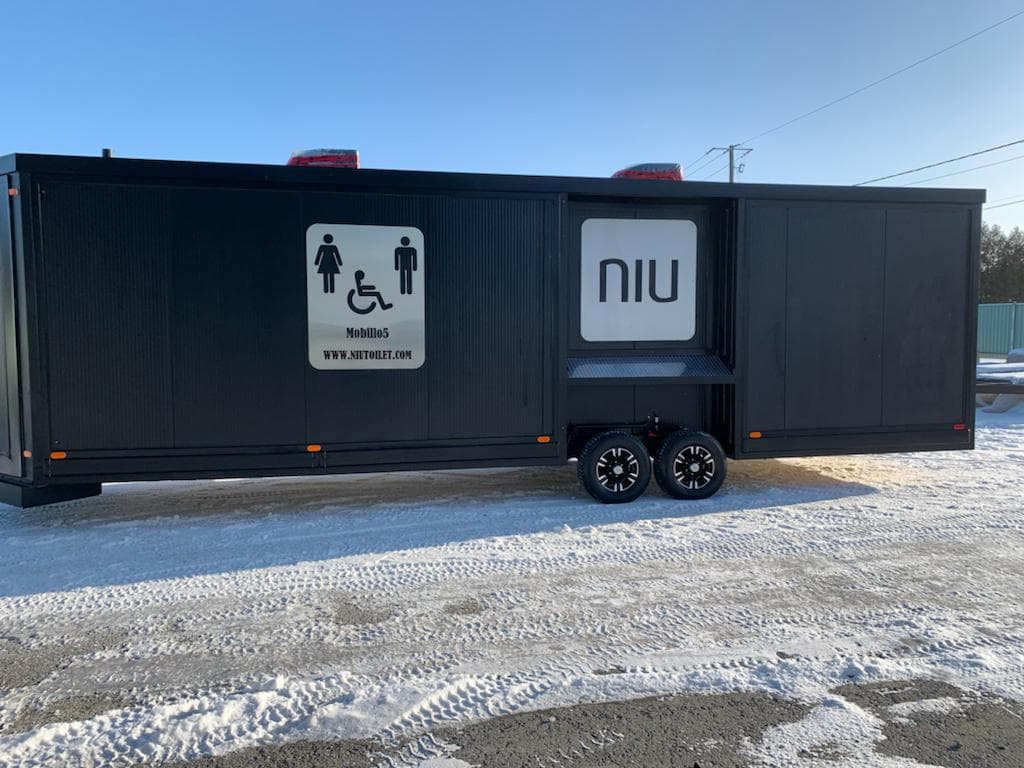
If you’re planning a smart washroom or toilet trailer for a park, trailhead, campground, or public site, here’s what to confirm early when your project references ADA/AODA (or a municipal accessibility standard).
This is written for municipalities, parks teams, consultants, and private operators across BC and Western Canada.
1) Start with the real question: which standard applies?
Before you talk layouts, confirm what you’re designing.
Confirm:
- Are you referencing ADA, AODA, local building code requirements, or a municipal standard?
- Is there an internal accessibility policy that overrides minimums?
- Who is the approver (owner, consultant, accessibility committee, AHJ/inspector)?
Why it matters: Accessibility can mean different things depending on who is approving and what the procurement package requires.
2) Define the accessible route (outside the unit)
A washroom can be perfectly accessible inside, but if the approach route isn’t planned, the project can still fail.
Confirm early:
- Where the accessible route starts (parking, road, pathway)
- Surface type (stable, slip-resistant)
- Slope/grade requirements (confirm per your standard)
- Lighting expectations (if evening use)
- Winter operations plan (snow clearing + safe access)
Common miss:
The unit is accessible, but the route is gravel, uneven, or poorly maintained in winter.
3) Door and entry: the #1 layout driver
Door approach decisions affect everything: interior clearances, fixture placement, and user experience.
Confirm:
- Door type: manual, power-assisted, or automatic
- Required clear opening width
- Threshold limits
- Entry clearance/turning space requirements
- Hardware preference (lever, push plate, etc.)
Why it matters: Door decisions often force a redesign if they’re made late.
4) Interior clearances: turning space + fixture access
This area is where most spec packages focus, but it’s still worth confirming early.
Confirm:
- Turning space requirement
- Clear floor space at fixtures
- Reach ranges for controls (including touchless activation zones)
- Transfer space requirements (if applicable)
Tip: If you already have a standard detail sheet, attach it to your quote request. It saves time.
5) Fixtures and accessories: accessibility + durability
In public sites, fixtures need to meet accessibility requirements and hold up to real-world use.
Confirm:
- Toilet height requirement
- Grab bar configuration requirements
- Sink clearance/height requirements
- Mirror height requirements
- Soap/towel/hand dryer reach requirements
Optional accessories to decide early:
- Baby change station
- Sharps container
- Coat hook/shelf
- Emergency call/alarm (if required)
6) Signage and wayfinding
Signage is often treated as an afterthought until it becomes an approval issue.
Confirm:
- Accessible washroom signage requirements
- Braille/tactile requirements (if applicable)
- All-gender vs gendered signage policy
- Directional signage needs from key paths
7) Accessibility includes reliability (operations planning)
For public sites, accessibility isn’t just dimensions; it’s also whether the washroom is consistently usable.
Confirm your operational plan for:
- Cleaning frequency (peak season vs off-season)
- Consumables restock plan
- Inspection cadence
- Response plan for closures/issues
Procurement note
For public sector buyers, Westplay supports purchasing through CANOU and Sourcewell procurement.
Next step
If you’re early in planning, you don’t need perfect drawings. You do need clarity on standards, door approach, and the accessible route.
Send your accessibility requirements (even partial) plus any site plan or photos, and Westplay can flag missing details early.