
Common Dog Park Mistakes That Cause Complaints
Most dog park problems aren’t random—they happen for a reason. Parks start getting complaints when a few key decisions are missed early. The good news? With some simple planning, you can prevent most of these problems from the start.

Mistake #1: Ignoring drainage (hello mud)
One of the biggest mistakes is ignoring drainage. It might not seem like a big deal at first, but poor drainage quickly leads to muddy entrances, standing water, bad smells, and sections of the park becoming unusable for months. A better approach is to choose a site that naturally drains well, then support it with proper surface and subsurface drainage. Pay extra attention to high-traffic areas like entrances, corners, and around water stations—these need reinforcement to hold up over time.
Mistake #2: Putting the gate in the wrong spot
Another common issue is poor gate placement. If the entrance is in the wrong spot, it can create crowding, increase the chance of dogs escaping, and even trigger conflicts right at the gate. A simple fix is to include a double-gate entry (a small holding area between gates), keep the main play space set back from the entrance, and make sure there’s a clear path for people and dogs to move in and out without bottlenecks.
Mistake #3: No clear rules or signage
Lack of clear rules and signage is another problem that shows up fast. Without visible expectations, misunderstandings happen, unsafe behavior increases, and enforcement becomes difficult. Keeping rules short, simple, and posted at every entrance makes a big difference. Include essentials like park hours, cleanup expectations, and who to contact if there’s an issue.
Mistake #4: No maintenance owner
Maintenance is often underestimated—or not assigned at all. When no one is clearly responsible, small problems turn into big ones: bins overflow, gates break, and surfaces wear down. Every park needs a designated owner, whether that’s a city department, strata, or management team. Along with that, there should be a regular inspection routine and a clear plan for how quickly issues get addressed.
Mistake #5: Not designing for people
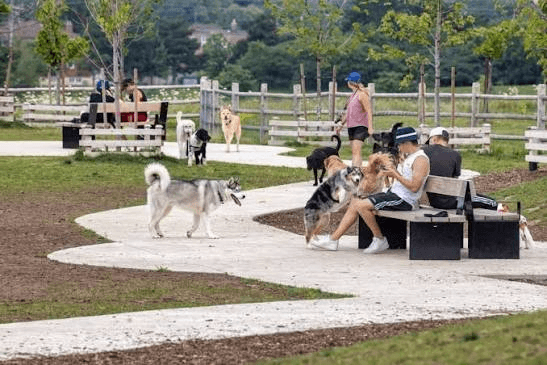
It’s also easy to forget that dog parks are designed for people just as much as dogs. When human movement and comfort aren’t considered, people tend to gather in the wrong spots, block pathways, and increase tension. Thoughtful design helps avoid this—add seating and shade in areas with good visibility, keep walking routes open, and make sure paths are safe and accessible for everyone.
Mistake #6: Underestimating waste and servicing
Finally, waste management is often underestimated. If bins are too few, poorly placed, or not serviced often enough, the result is predictable: smell, mess, and complaints. Waste stations should be placed along natural walking paths so they’re easy to use, and bin capacity should match how busy the park gets, with a pickup schedule to keep things under control.
If you want a simple way to check your plan, here’s a quick complaint-prevention checklist:
- Do you have a clear drainage plan?
- Are high-wear areas reinforced?
- Does your entrance design prevent crowding and escapes?
- Are rules clearly posted at every entry?
- Is there a defined maintenance owner and schedule?
If you can confidently say “yes” to all of these, you’re already ahead of most problem parks—and far less likely to deal with complaints later.
Need help or want more info on building your next dog park? Reach out to us at info@westplay.ca or call +1 604-424-4168—we’re here to help!