
How to plan the age groups and capacity of your playground project
One of the fastest ways to end up with a playground that feels “too small,” “too chaotic,” or “not used” is skipping age-group and capacity planning.
When you plan for who will use the space (and how many kids will be there at peak times), you get better outcomes:
- Safer play flow
- Better supervision sightlines
- Less conflict between age groups
- More play value per square foot
- Fewer redesigns later
Here is how to do it:
Table of Contents
- Choose your primary age group
- Plan for peak use (capacity)
- Decide if you need separate zones
- Design for supervision and safe flow
- Match play types to age groups (quick guide)
- Want help planning age groups and capacity (before design starts)?
- Email us at info@westplay.ca and we’ll help you scope your next steps.
Choose your primary age group
Most playgrounds serve more than one age group, but you still need a realistic and clear “primary” age group.
Common age groups:
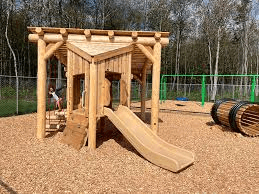
- 2–5 (toddlers / preschool): lower heights, shorter slides, more ground-level play
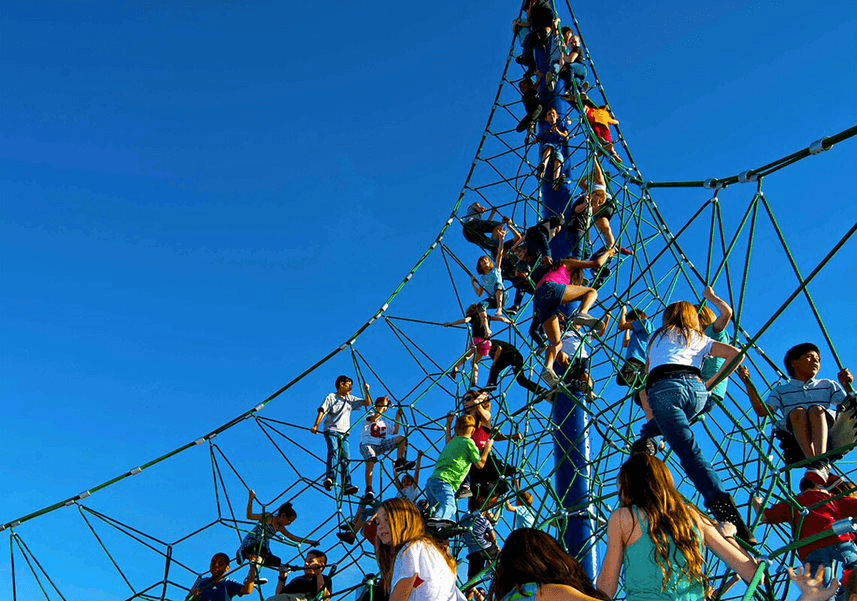
- 5–12 (school age): more climbing, higher challenge, bigger capacity needs
- Mixed ages: requires zoning and clear circulation to reduce conflict
What age group will use it most?
- 2–5
- 5–12
- Mixed
Plan for peak use (capacity)
Capacity planning isn’t about an exact number. It’s about avoiding a playground that gets overcrowded at peak times.
Where “peak use” comes from
- School recess waves
- Daycare groups rotating outside
- After-school rush
- Weekend park traffic
- Nearby sports fields/events
Simple capacity ranges (pick one)
- Under 10 users at peak
- 10–25 users at peak
- 25–50 users at peak
- 50+ users at peak
Write your best guess:
- Peak users:
Decide if you need separate zones
If you’re serving toddlers and older kids in one space, zoning is usually the difference between “this works” and “this is stressful.”
When zoning is strongly recommended
- Mixed ages (2–5 and 5–12)
- Busy public parks
- Schools with K–5
- Sites where supervision is limited
Common zone setup
- Toddler zone (2–5): closer to seating/supervision, lower heights, more sensory play
- School-age zone (5–12): higher challenge, climbing, overhead events, more capacity
- Shared zone: swings, spinners, musical/sensory panels, gathering space

Design for supervision and safe flow
Even great equipment can feel unsafe if the flow is messy.
What “good flow” looks like
- Clear entry points
- No tight bottlenecks
- Sightlines to the highest-risk areas (slides, climbers, swings)
- Seating placed where caregivers can actually supervise
School/daycare note:
If staff need to supervise multiple groups, prioritize:
- Open sightlines
- Clear boundaries
- Simple circulation routes
Match play types to age groups (quick guide)
For ages 2–5
Prioritize:
- Ground-level play (sensory, musical, panels)
- Low platforms and short slides
- Simple climbers with safe fall heights
- Cozy spaces for social play
Avoid:
- High challenge elements designed for 5–12
- Tight, crowded layouts
For ages 5–12
Prioritize:
- Climbing and upper-body play (nets, overhead events)
- Higher challenge with safe fall zones
- Multiple ways up/down to reduce congestion
- Enough capacity so kids aren’t waiting in lines
For mixed ages
Prioritize:
- Clear zones + shared social play areas
- Accessible routes to key play areas
- Ground-level play options so more kids can participate
Want help planning age groups and capacity (before design starts)?
Email us at info@westplay.ca and we’ll help you scope your next steps.